Right Angle Gearboxes for Modern Manufacturing: Precision, Durability, and Compact Design
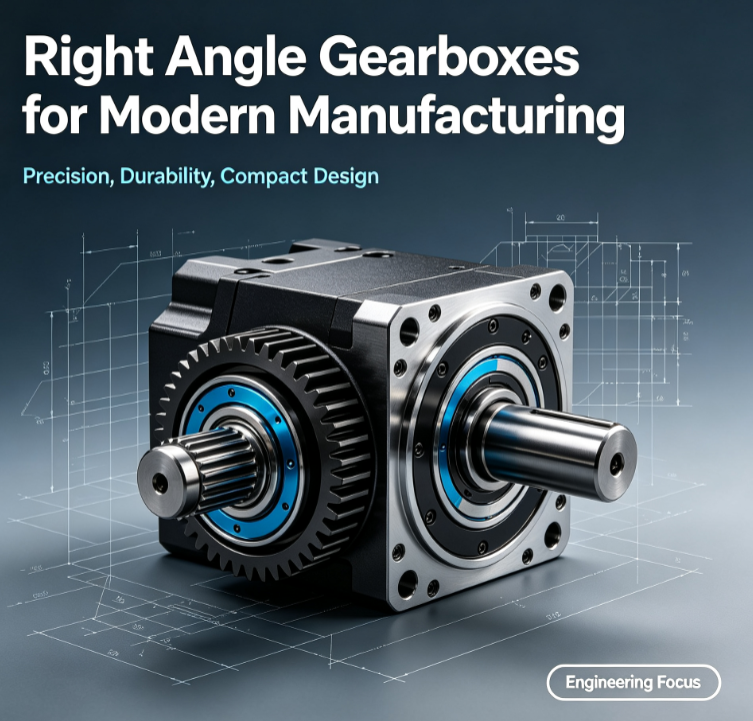
Table of Contents
1. Introduction
2. What Is a Right Angle Gearbox?
3. Why Right Angle Gearboxes Matter in Modern Manufacturing
4. The Main Types of Right Angle Gearboxes
5. Key Performance Parameters
6. Common Applications Across Industries
7. Real-World Case Study
8. Selection Considerations for Procurement and Engineering
9. Maintenance and Lubrication
10. Frequently Asked Questions (FAQ)
11. Conclusion
Introduction
Let me start with something I've learned over years of working with manufacturing engineers and procurement teams across automotive, packaging, and industrial automation.
The right angle gearbox is one of those components that quietly does its job—day in, day out—without anyone really thinking about it. Until it doesn't.
And when a right angle gearbox fails, it's rarely subtle. Production lines stop. Conveyors grind to a halt. Robotic arms lose their positioning accuracy. And suddenly, everyone in the plant is asking the same question: "Why didn't we catch this sooner?"
The global industrial right-angle gearbox market was estimated at $2.5 billion in 2025** and is projected to grow at a CAGR of 6% to reach approximately $4 billion by 2033. The inline and right angle planetary gearbox segment alone was worth $1.485 billion in 2025 and is expected to hit **$2.581 billion by 2032 at an 8.3% CAGR.
Those numbers reflect something real. Manufacturers are investing in right angle gearboxes because they solve a fundamental problem: how to transmit power efficiently in spaces where straight-line transmission just isn't possible.
Whether you're a procurement manager evaluating suppliers, an engineer specifying drive components, or a plant manager looking to improve production reliability—this guide covers what you actually need to know.
What Is a Right Angle Gearbox?
A right angle gearbox—sometimes called a 90-degree gearbox or right-angle drive—is a mechanical device that transmits power between two shafts oriented at a 90-degree angle to each other.
That's the simple definition. The more complete version is this: a right angle gearbox is a power transmission system that changes the direction of rotational motion while also providing speed reduction and torque multiplication.
The input shaft connects to a power source—typically an electric motor, servo motor, or internal combustion engine. The output shaft delivers that power to the driven equipment at a right angle. Inside the housing, gears of various types—bevel, spiral bevel, hypoid, worm, or planetary—mesh together to transfer torque.
Why does this matter? Because manufacturing equipment rarely allows for straight-line power transmission. Motors need to be mounted where space permits. Driven equipment needs to be positioned where the work happens. The right angle gearbox bridges that gap.
Why Right Angle Gearboxes Matter in Modern Manufacturing
Let me be direct about this. The demand for right angle gearboxes is growing—and growing fast—because modern manufacturing is getting more compact, more automated, and more precise.
Here's what I see on shop floors and in engineering offices:
Space is always tight. Machine designers are under constant pressure to reduce footprint. A right angle gearbox lets you mount the motor parallel to the driven shaft instead of in-line, saving valuable floor space.
Automation is expanding. Industrial robot installations continue to grow worldwide, with more than 4 million robots now operating in factories globally. Every robotic axis, every conveyor, every packaging line needs reliable power transmission. Right angle gearboxes are at the heart of many of these systems.
Precision requirements are tightening. Tolerances that were acceptable five years ago are now scrap. High-precision right angle gearboxes with low backlash—sometimes below 2 arc-minutes—are enabling the next generation of servo-driven motion control.
The market data tells the same story. The industrial right-angle gearbox market is being driven by growth in agricultural machinery, material handling, food processing, and packaging machinery. These aren't niche applications. They're the backbone of global manufacturing.
The Main Types of Right Angle Gearboxes
Not all right angle gearboxes are created equal. The choice of gear type has a significant impact on performance, efficiency, cost, and application suitability.
Spiral Bevel Gearboxes
Spiral bevel gearboxes use cone-shaped gears with curved teeth that engage progressively rather than abruptly. This design reduces vibration and noise compared to straight bevel gears.
Typical ratio range: ~1:1 to ~6:1 (single stage)
Efficiency: 94% to 98%
Best for: Applications requiring smooth, efficient right-angle transmission with moderate ratios
Spiral bevel gearboxes are commonly used in industrial automation, CNC machine tools, packaging machinery, and conveyor systems. The precision-ground gears and optimized lubrication systems in modern designs achieve transmission efficiency exceeding 95% while minimizing energy loss.
Hypoid Gearboxes
Hypoid gears are similar to spiral bevel gears but with one key difference: the axes are offset from each other. This offset allows for greater tooth contact area, which means higher load-carrying capability and smoother operation.
Hypoid gearboxes can achieve single-stage ratios up to 10:1 or even 15:1—significantly higher than spiral bevel designs. They also offer a smaller footprint than worm gearboxes with comparable ratings.
Efficiency: High, but slightly lower than spiral bevel due to increased sliding action
Best for: Applications requiring higher ratios in a single stage with good efficiency
Worm Gearboxes
Worm gearboxes use a worm (screw) that drives a worm wheel. They're one of the most cost-effective reduction solutions, particularly for high ratios.
Typical ratio range: Minimum 5:1, with efficiency decreasing as ratios increase
Efficiency: Wide range—approximately 30% to 90% depending on ratio
Best for: Applications requiring high reduction ratios in a compact space, or where self-locking capability is needed
Worm gearboxes are widely used in manufacturing facilities for speed reduction applications. However, the sliding action within the gear mesh generates heat and reduces efficiency compared to bevel or hypoid designs.
Right Angle Planetary Gearboxes
Planetary gearboxes use a sun gear, planet gears, and a ring gear in a compact coaxial arrangement. When configured for right-angle output, they combine the precision of planetary gearing with 90-degree power transmission.
Typical backlash: As low as <2 arc-minutes in high-precision versions
Efficiency: High—typically 90% to 98%
Best for: Precision motion control, servo applications, robotics, and applications requiring low backlash and high positioning accuracy
Gear Type | Typical Ratio (Single Stage) | Efficiency | Key Advantage | Key Limitation |
Spiral Bevel | ~1:1 to ~6:1 | 94–98% | Smooth, quiet, efficient | Limited ratio range |
Hypoid | Up to 10:1 or 15:1 | High | Higher ratios, compact | More sliding friction |
Worm | 5:1 and above | 30–90% | High ratios, self-locking | Lower efficiency, heat |
Right Angle Planetary | Wide range | 90–98% | Low backlash, precision | Higher cost |
Key Performance Parameters
When specifying a right angle gearbox, several performance parameters matter. Here's what engineers and procurement professionals should evaluate.
Gear Ratio
The ratio determines the relationship between input speed and output speed. For spiral bevel gearboxes, single-stage ratios typically range from approximately 1:1 to 6:1. Higher ratios require multi-stage solutions.
Backlash
Backlash is the amount of play between gear teeth. For precision applications—robotics, CNC machining, servo systems—low backlash is critical.
Standard spiral bevel gearboxes offer backlash in the range of 10 to 30 arc-minutes. High-precision right angle planetary gearboxes can achieve backlash as low as <2 arc-minutes. For context, 1 arc-minute is 1/60 of a degree.
Efficiency
Efficiency determines how much input power is lost as heat. Spiral bevel gearboxes typically achieve 94% to 98% efficiency at load. Right angle planetary gearboxes can reach similar levels—90% to 98%.
Higher efficiency means lower energy consumption, reduced heat generation, and longer component life.
Output Torque
Torque capacity varies widely depending on gearbox size and design. Industrial right-angle gear units can deliver output torques up to 260,000 Nm in heavy-duty applications. Precision gearboxes for servo applications typically range from a few Nm to several thousand Nm.
Service Life
Quality right angle gearboxes are designed for long service life. Many spiral bevel gearboxes are rated for 12,000 operating hours under continuous duty conditions. With proper maintenance, many gearboxes exceed their rated service life significantly.
Common Applications Across Industries
Right angle gearboxes are everywhere in modern manufacturing. Here are some of the most common applications.
Industrial Automation and Robotics
Robotic arms, pick-and-place systems, and automated guided vehicles all rely on right angle gearboxes for compact, precise power transmission. Low backlash is particularly important in these applications to maintain positioning accuracy.
Neugart's WPLN right-angle gearbox, for example, is engineered specifically for demanding packaging automation applications, offering backlash of less than 5 arc-minutes in standard configuration.
Packaging Machinery
Packaging lines require reliable, high-speed operation with frequent start-stop cycles. Right angle gearboxes are used extensively in conveyor systems, labeling machines, filling equipment, and case packers.
The ability to mount motors parallel to the driven shaft—rather than in-line—saves valuable floor space on crowded packaging lines.
Conveyor Systems
Material handling relies on right angle gearboxes to drive belt conveyors, roller conveyors, and chain conveyors. Heavy-duty right angle gear units with output torques up to 260,000 Nm are used in large-scale conveyor systems.
CNC Machine Tools
Machine tools require precise, repeatable motion. Right angle gearboxes are used in rotary axes, tool changers, and positioning systems. The combination of high efficiency and low backlash makes spiral bevel and right angle planetary gearboxes ideal for these applications.
Agricultural Machinery
Right angle gearboxes are essential components in tractors, harvesters, balers, mowers, and irrigation equipment. They enable power transmission from the power take-off (PTO) shaft to driven implements mounted at right angles.
Aerospace and Automotive
In aerospace, right angle gearboxes are used in landing gear actuation, flight control systems, and engine accessories. In automotive manufacturing, they're found in assembly line equipment, powertrain testing, and robotic welding cells.
Food Processing
Stainless steel right angle gearboxes with corrosion-resistant housings are used in food processing equipment where washdown and sanitation are required. Food-grade lubricants are available for applications where incidental contact with food products is possible.
Real-World Case Study: maxon and Framo Morat
Let me share a real example that illustrates everything we've been discussing.
In modern medical technology, drive systems must meet the highest demands—strict safety and hygiene standards, compact form factors, and extreme precision. Surgical robots require high power density with clever spatial arrangement, and abrasive wear that could increase backlash is unacceptable.
maxon, a leading manufacturer of precision drive systems, partnered with Framo Morat to develop the RAD (Right Angle Drive) angular drive for surgical robotics applications.
The project involved developing a speeroX gear set within defined interface parameters, optimized for load capacity and manufacturability. Precision, reliability, and safety were the key priorities.
The results speak for themselves:
A two-year validation phase was successfully completed
The RAD Right Angle Drive remains lightweight despite its robust design, making it ideally suited for cutting-edge surgical robots
Minimal backlash ensures maximum precision for highly complex robotic tasks
The drive system includes both a speeroX right angle stage and a planetary stage, ensuring durable and safe operation in medical environments
This case study demonstrates how advanced right angle gearbox technology enables precision applications that simply weren't possible with conventional power transmission solutions. The close cooperation between maxon and Framo Morat shows that—particularly in challenging sectors like medical technology—the future of drive technology is shaped through shared innovation and expertise.
Selection Considerations for Procurement and Engineering
Choosing the right right angle gearbox isn't just about matching dimensions. Here are the key factors to evaluate.
1. Torque Requirements
Calculate both continuous torque and peak torque requirements. The gearbox must handle peak loads without failure while operating efficiently at continuous loads.
2. Gear Ratio
Determine the required speed reduction. For spiral bevel gearboxes, verify that the ratio falls within the single-stage range (approximately 1:1 to 6:1). Higher ratios require multi-stage solutions.
3. Backlash Tolerance
For precision positioning applications, specify low backlash. Standard gearboxes offer 10–30 arc-minutes; precision versions can achieve <2 arc-minutes.
4. Mounting Orientation
Mounting orientation affects lubrication behavior and thermal performance. Some gearboxes require specific orientations for proper oil circulation.
5. Environmental Conditions
Consider temperature, humidity, dust, and washdown requirements. Stainless steel housings are available for corrosive environments. IP65-rated protection is available for dusty or wet environments.
6. Automation Compatibility
If the gearbox will be integrated with servo motors or robotic systems, verify compatibility with the control system and mounting interfaces.
7. Supplier Quality and Support
Evaluate potential suppliers on:
Quality management certifications (ISO 9001, IATF 16949 for automotive)
Manufacturing capability (CNC machining, heat treatment, precision grinding)
Engineering support (sizing assistance, custom modifications)
After-sales service (spare parts, technical troubleshooting)
Maintenance and Lubrication
Proper maintenance extends gearbox life significantly. Here's what I've learned from years of working with these components.
Lubrication is Critical
The most common causes of premature gearbox failure are lack of lubrication and incorrect lubrication. Right angle worm gearboxes, in particular, require proper lubrication in the appropriate amounts.
Key lubrication practices:
Use the lubricant type and viscosity specified by the manufacturer
Industrial right-angle gearboxes can typically be lubricated with ISO VG 460 worm gear oil or synthetic lubricant
For applications with brass components, synthetic gear oil is often recommended
Follow the manufacturer's recommendations for oil change intervals—typically every 200 hours or annually for heavy-duty applications
Regular Inspection
Routine inspections should include:
Checking for oil leaks at seals and fittings
Monitoring operating temperature
Listening for unusual noise or vibration
Verifying proper oil level
Mounting Orientation Matters
Mounting orientation affects lubrication requirements. A gearbox mounted in worm-over orientation needs a certain oil level; the same gearbox mounted in worm-under orientation requires additional lubrication.
Frequently Asked Questions (FAQ)
Q: What is a right angle gearbox used for?
A: A right angle gearbox transmits power between two shafts oriented at 90 degrees to each other. It's used whenever space constraints or mechanical layout requirements prevent straight-line power transmission—in conveyors, packaging machinery, robotics, CNC machine tools, agricultural equipment, and many other applications.
Q: What's the difference between spiral bevel and hypoid gearboxes?
A: Spiral bevel gears have intersecting axes; hypoid gears have offset axes. The offset in hypoid gears allows for greater tooth contact area, higher load capacity, and smoother operation—but also introduces more sliding friction.
Q: How efficient are right angle gearboxes?
A: Spiral bevel gearboxes typically achieve 94% to 98% efficiency at load. Right angle planetary gearboxes reach 90% to 98%. Worm gearboxes have wider efficiency variation—approximately 30% to 90% depending on ratio.
Q: What is backlash and why does it matter?
A: Backlash is the amount of play between gear teeth. In precision applications like robotics and CNC machining, low backlash is critical for positioning accuracy. Standard gearboxes offer 10–30 arc-minutes; precision versions can achieve <2 arc-minutes.
Q: How long do right angle gearboxes last?
A: Quality gearboxes are rated for 12,000 operating hours or more under continuous duty. With proper maintenance—correct lubrication, regular inspection, and proper mounting—many gearboxes exceed their rated service life.
Q: What should I look for when choosing a right angle gearbox supplier?
A: Evaluate technical capability (gear type, materials, manufacturing processes), quality certifications (ISO 9001, CE), engineering support, and after-sales service. Don't base the decision on price alone—total cost of ownership matters more.
Conclusion
Here's what I want you to take away from this.
A right angle gearbox isn't the most glamorous component in a manufacturing system. It doesn't have the speed of a servo motor or the intelligence of a control system. But it's the foundation that makes compact, efficient power transmission possible.
If the gearbox fails—if efficiency drops, backlash increases, or bearings wear out—the entire system suffers. Production slows. Quality degrades. Maintenance costs rise.
Right angle gearboxes deliver what modern manufacturing demands: compact power transmission, high efficiency, and reliable operation in increasingly demanding applications.
The market is growing at 6% to 8% annually. Automation is expanding. Precision requirements are tightening. And the companies that invest in quality right angle gearboxes—and choose the right type for each application—are the ones that will succeed.
Whether you're a procurement manager evaluating suppliers, an engineer specifying drive components, or a plant manager looking to improve production reliability—the fundamentals don't change. Understand the application. Match the gear type to the requirements. Prioritize quality and support over the lowest price.
Right angle gearboxes are the quiet workhorses of modern manufacturing. They deserve more attention than they usually get. And when you choose the right one, you'll barely notice it's there—which, honestly, is exactly the point.