Drilling Equipment Gearbox: Key Features, Specifications and Application Guide
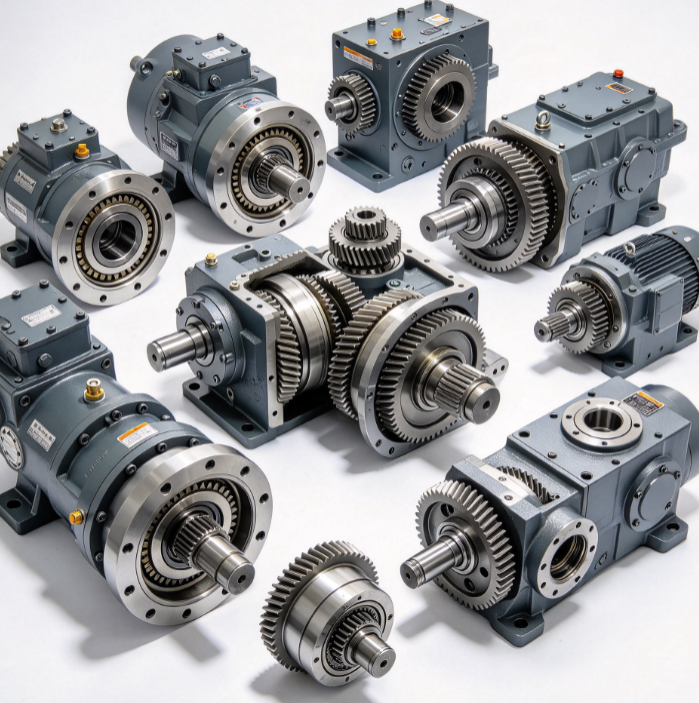
Table of Contents
1. Introduction
2. Common Types of Drilling Equipment Gearbox
3. Key Technical Specifications and Performance Data
4. Core Functional Features
5. Main Industrial Applications
6. Basic Maintenance Guidelines
7. Industry FAQ
Introduction
Drilling equipment gearbox acts as the core power transmission component for all drilling machinery. It transfers motor power to drilling tools. It adjusts rotating speed and output torque to fit different drilling conditions.
Most field drilling operations face heavy load, high friction and unstable working environments. A reliable drilling gearbox directly decides drilling efficiency and equipment service life.
Planetary gearbox and helical gearbox are the two most widely used types in modern drilling equipment. Different structure designs meet diverse load demands from shallow foundation drilling to deep well drilling.
Common Types of Drilling Equipment Gearbox
Planetary Drilling Gearbox
Planetary gearbox is the mainstream choice for rotary drilling rigs. It has compact structure and high torque density. It can bear continuous heavy load in long-time drilling work.
This gearbox uses multi-stage planetary transmission. It achieves stable speed reduction and torque amplification. It fits large-diameter pile drilling and deep geological drilling projects.
Helical Drilling Gearbox
Helical gearbox applies high-precision helical gears. It runs with low noise and high transmission stability. Its transmission efficiency is higher than ordinary gear models.
It is more suitable for medium and small drilling equipment. It works well for foundation drilling and portable drilling machinery.
Key Technical Specifications and Performance Data
Technical parameters determine the working performance of drilling equipment gearbox. The following table shows mainstream specification data of common drilling gearbox models. All data comes from industrial standard test reports and product parameter verification.
Parameter Item | Planetary Gearbox | Helical Gearbox |
Speed Ratio Range | 20:1 – 60:1 | 4:1 – 230:1 |
Max Output Torque | Up to 500 kNm | Up to 35 kNm |
Transmission Efficiency | 92% – 94% | Up to 96% |
Standard Input Speed | 500 – 1200 RPM | 540 – 1000 RPM |
Gear Material | 20CrMnTi Alloy Steel | 20CrMnTi Alloy Steel |
Gear surface hardness of qualified drilling gearbox reaches 58-62 HRC after carburizing and quenching treatment. This hardness level effectively resists wear in high-strength drilling work.
Precision models keep backlash within 1 arc-minute. It ensures no position deviation during high-precision drilling operations.
Core Functional Features
Strong Load Resistance
Drilling equipment gearbox adopts integral cast box body and forged alloy gears. It can resist impact load generated by hard rock drilling and stratum mutation.
It supports long-hour continuous operation. It does not easily deform or damage under heavy working conditions.
High Transmission Efficiency
Precision gear grinding process reduces gear meshing friction. Helical and planetary structures both realize low energy loss transmission.
High efficiency lowers equipment energy consumption. It saves operating costs for long-term drilling projects.
Good Environmental Adaptability
Most drilling gearbox products reach IP65 protection level. They block dust, mud and moisture in outdoor and underground working scenes.
Special surface coating improves corrosion resistance. It extends service life in harsh geological environments.
Main Industrial Applications
Drilling equipment gearbox is widely matched with various drilling machinery. It covers multiple industrial drilling fields.
It applies to rotary drilling rigs for construction foundation engineering. It provides stable rotating power for pile foundation drilling.
It works with water well drilling equipment and geological exploration drilling machines. It adjusts torque and speed for different underground stratum conditions.
It also supports portable post hole diggers and small engineering drilling tools. It meets light and medium drilling operation demands.
Basic Maintenance Guidelines
Regular maintenance greatly prolongs the service life of drilling equipment gearbox. Simple daily checks avoid most sudden failures.
Check gearbox lubricating oil level every 7 working days. Replace lubricating oil every 3 to 6 months according to working intensity.
Clean surface dust and mud regularly. Prevent foreign matters from entering the internal gear meshing area.
Check bolt tightness before each operation. Loose bolts will cause vibration and reduce transmission precision.
Industry FAQ
Q1: What gearbox type is better for deep well drilling?
Planetary drilling gearbox is the best choice. It has high torque output and strong load capacity. It stably supports deep well and large-diameter drilling work.
Q2: Why does drilling gearbox need alloy steel gear material?
Alloy steel has high hardness and wear resistance. Ordinary steel gears wear fast in hard stratum drilling. Alloy steel materials adapt long-term high-load drilling work.
Q3: What is the main factor affecting gearbox transmission efficiency?
Gear machining precision and lubrication state are key factors. High-precision grinding and standard lubrication keep efficiency above 92% for a long time.
Q4: How to judge gearbox failure in drilling work?
Abnormal noise, obvious vibration and sudden drop of drilling torque are typical failure signs. Stop equipment timely for inspection to avoid secondary damage.