Compound Transfer Cases Trends: How Advanced Power Transmission Systems Support the Future of Heavy-Duty Industries
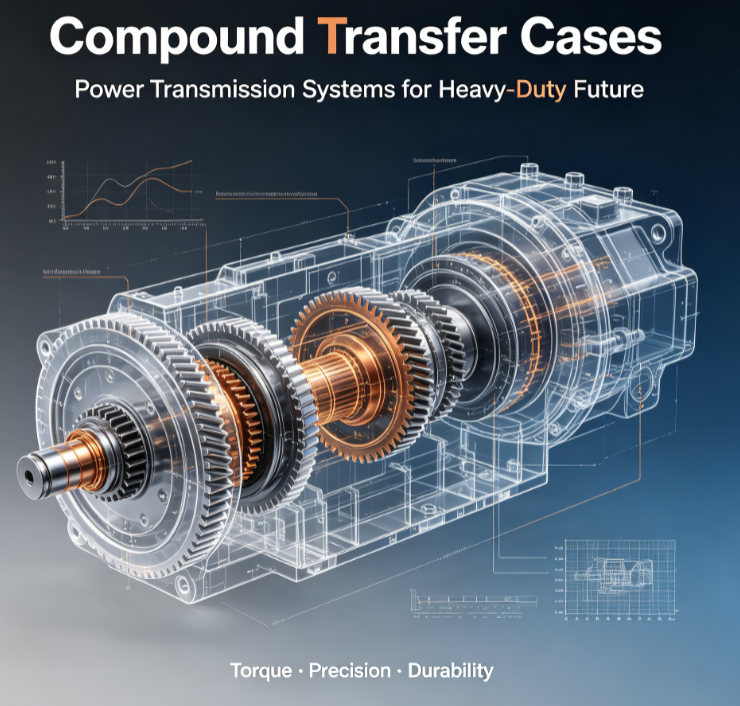
Introduction: The Changing Demand for More Reliable Power Transmission
Heavy-duty industries are entering a new stage where equipment performance, operational efficiency, and long-term reliability are becoming more important than ever.
From construction machinery and off-road vehicles to agricultural equipment and specialized industrial vehicles, manufacturers are facing increasingly complex operating conditions. Higher loads, difficult environments, and changing application requirements are pushing traditional drivetrain systems to their limits.
This shift is driving greater attention toward advanced transmission technologies, including Compound Transfer Cases.
Unlike conventional transfer systems designed for basic power distribution, compound transfer cases are developed for applications requiring more flexible power management, higher torque capability, and improved drivetrain adaptability.
As global industries continue to invest in advanced machinery and specialized vehicles, the role of reliable power transmission components is becoming increasingly important. Manufacturers are not only looking for stronger equipment but also for drivetrain solutions that can improve efficiency, reduce maintenance requirements, and support long-term operation.
Table of Contents
· Global Demand Growth for Advanced Drivetrain Solutions
· Why Compound Transfer Cases Are Gaining Industry Attention
· Key Industry Trends Driving Transfer Case Development
· Challenges in Modern Power Transmission Systems
· Standard Transfer Cases vs Compound Transfer Cases Comparison
· Application Expansion Across Global Industries
· Future Development Trends in Transmission Technology
· The Importance of Reliable Manufacturing Partners
· Frequently Asked Questions
Global Demand Growth for Advanced Drivetrain Solutions
The global machinery and commercial vehicle industries are undergoing continuous transformation.
Construction, mining, agriculture, logistics, and special-purpose vehicle manufacturers are investing in equipment that can deliver higher productivity while operating in more demanding environments.
According to global industrial market analysis, the construction equipment sector continues to expand as infrastructure investment increases across different regions. At the same time, the growth of off-road vehicles and specialized machinery is creating demand for stronger drivetrain systems capable of handling challenging conditions.
Power transmission components are becoming a key focus area because they directly influence:
· Torque delivery
· Vehicle mobility
· Operating efficiency
· Equipment durability
A drivetrain system is only as reliable as its supporting components. When machines operate under heavy loads, transfer systems must maintain stable performance throughout long working cycles.
Industry Development Trend | Impact on Equipment Manufacturers | Requirement for Transmission Components |
Growth of heavy machinery applications | Higher operating loads | Stronger torque capacity |
Expansion of off-road vehicles | More complex terrain conditions | Better power distribution capability |
Equipment customization | More specialized vehicle designs | Flexible drivetrain solutions |
Efficiency improvement goals | Need to reduce energy losses | Optimized transmission performance |
Why Compound Transfer Cases Are Gaining Industry Attention
Traditional transfer cases have been widely used for decades, but modern equipment requirements are becoming more complex.
Many vehicles and machines now require:
· Multiple power output paths
· Improved traction control
· Higher torque handling
· Customized drivetrain configurations
This is where Compound Transfer Cases provide advantages.
A compound transfer case combines advanced mechanical design with flexible power distribution capabilities. It helps deliver engine power more effectively to different drive systems, making it suitable for applications where standard solutions may not provide enough performance.
For heavy-duty equipment manufacturers, this technology provides additional flexibility when designing vehicles for specialized working environments.
Key Industry Trends Driving Transfer Case Development
1. Growth of Specialized Vehicles
Modern industries increasingly rely on vehicles designed for specific tasks.
Examples include:
· Mining vehicles
· Emergency response vehicles
· Agricultural machinery
· Engineering transport equipment
· Heavy-duty off-road vehicles
These applications often require drivetrain systems that are different from standard commercial vehicles.
Customized transfer solutions allow manufacturers to optimize performance according to actual operating conditions.
2. Increasing Focus on Equipment Reliability
Downtime is expensive for industrial users.
When heavy machinery stops operating, companies may face:
· Reduced productivity
· Higher maintenance costs
· Delayed projects
As a result, equipment manufacturers are placing greater emphasis on durable components that can maintain stable operation over long periods.
3. Demand for Flexible Manufacturing
The global equipment market is becoming more customized.
Manufacturers need components that can adapt to different:
· Vehicle platforms
· Load requirements
· Operating environments
· Performance targets
This trend is increasing demand for specialized drivetrain components such as compound transfer cases.
Challenges in Modern Power Transmission Systems
Although drivetrain technology continues to improve, manufacturers still face several challenges.
Higher Torque Requirements
Heavy-duty machines are becoming more powerful, which places greater stress on transmission components.
Transfer systems must handle increased torque while maintaining:
· Mechanical stability
· Gear reliability
· Long service life
Complex Vehicle Designs
Modern machinery often requires unique drivetrain layouts.
A standard component may not always match:
· Vehicle dimensions
· Output requirements
· Operating conditions
This creates demand for engineering-based solutions.
Balancing Performance and Efficiency
Manufacturers must find a balance between strength and efficiency.
A high-performance transfer case should provide reliable power transmission while minimizing unnecessary energy loss.
Standard Transfer Cases vs Compound Transfer Cases Comparison
Comparison Factor | Standard Transfer Cases | Compound Transfer Cases |
Design Purpose | General power transfer | Complex power distribution |
Application Range | Conventional vehicles | Heavy-duty and specialized equipment |
Torque Management | Standard load handling | Higher torque capability |
Configuration Flexibility | Limited options | More adaptable designs |
Suitable Environment | Regular operating conditions | Challenging industrial applications |
The choice between different transfer systems depends on the equipment design, operating environment, and performance requirements.
For specialized machinery, compound solutions often provide greater flexibility.
Application Expansion Across Global Industries
Compound Transfer Cases are becoming increasingly relevant across multiple sectors.
Construction Equipment
Construction machinery operates under demanding conditions where reliability is essential.
Transfer systems support:
· Heavy-load movement
· Improved traction
· Stable power delivery
Mining Equipment
Mining environments require machines capable of continuous operation under extreme conditions.
Reliable drivetrain components help improve equipment availability and reduce maintenance interruptions.
Agricultural Machinery
Modern agricultural equipment requires strong performance across different terrain conditions.
Advanced transfer systems support better mobility and power distribution.
Special-Purpose Vehicles
Emergency vehicles, industrial transport vehicles, and customized equipment often require specialized drivetrain configurations.
Compound transfer cases provide manufacturers with more design flexibility.
Future Development Trends in Transmission Technology
The future of power transmission systems will be influenced by several major trends.
Higher Efficiency Requirements
Equipment manufacturers are focusing on improving mechanical efficiency to reduce operating costs.
Future transfer systems will continue to optimize:
· Gear performance
· Power distribution
· Energy utilization
More Customized Solutions
As industries become more specialized, demand for customized transmission components will continue to increase.
Manufacturers need solutions designed around specific applications rather than universal products.
Integration with New Power Systems
The development of hybrid machinery and alternative power technologies may create new requirements for drivetrain components.
Future transmission systems will need to combine:
· Mechanical reliability
· Design flexibility
· Compatibility with evolving power sources
The Importance of Reliable Manufacturing Partners
For equipment manufacturers, choosing a drivetrain component supplier is an important strategic decision.
A reliable manufacturer should provide more than product production capability.
Key factors include:
· Engineering support
· Manufacturing experience
· Quality control capability
· Custom development ability
· Consistent production performance
As drivetrain systems become more specialized, suppliers with strong technical understanding will play a more important role in supporting global equipment manufacturers.
How Shenglite Machinery Supports Advanced Transmission Applications
Shenglite Machinery focuses on developing and manufacturing mechanical transmission products for industrial applications.
With attention to precision manufacturing and drivetrain solutions, the company supports customers requiring reliable components such as Compound Transfer Cases for demanding operating environments.
By combining manufacturing capability with application-focused development, Shenglite Machinery helps customers create more reliable and efficient equipment solutions.
Frequently Asked Questions
1. What are Compound Transfer Cases mainly used for?
Compound Transfer Cases are used in drivetrain systems that require advanced power distribution, higher torque handling, and flexible vehicle configurations.
2. Why are compound transfer cases important for heavy-duty equipment?
Heavy-duty equipment often operates under high loads and difficult conditions. Compound transfer cases help improve power delivery reliability and drivetrain performance.
3. Which industries use Compound Transfer Cases?
They are commonly used in construction machinery, off-road vehicles, agricultural equipment, mining vehicles, and specialized industrial vehicles.
4. Can transfer cases be customized for specific equipment?
Yes. Many industrial applications require customized transfer solutions based on vehicle design, load requirements, and operating conditions.
Conclusion
As global industries continue to demand stronger, smarter, and more adaptable machinery, advanced drivetrain systems are becoming increasingly important.
Compound Transfer Cases provide manufacturers with a practical solution for improving power distribution, handling higher loads, and supporting specialized equipment designs.
The future of heavy-duty machinery will depend not only on powerful engines but also on reliable transmission systems that can deliver performance under real-world conditions.
For companies developing specialized vehicles and industrial equipment, partnering with an experienced transmission component manufacturer can help achieve better reliability, efficiency, and long-term operational value.