Compound Transfer Cases: Improving Power Distribution and Drivetrain Performance for Heavy-Duty Applications
Introduction: Why Advanced Transfer Systems Matter in Modern Machinery
In heavy-duty vehicles and industrial equipment, the drivetrain system plays a critical role in converting engine power into reliable movement. When machines operate in demanding environments such as construction sites, off-road conditions, agriculture, or special-purpose transportation, standard drivetrain solutions may not always provide the required performance.
This is where Compound Transfer Cases become increasingly important.
Unlike conventional transfer cases designed for basic power distribution, compound transfer cases are engineered for more complex drivetrain requirements. They help manage power flow between multiple output systems, improve torque distribution, and support vehicles or equipment operating under challenging conditions.
As global industries continue to demand higher efficiency, stronger load capacity, and better adaptability, manufacturers are paying more attention to advanced power transmission components that can improve overall system performance.
For companies developing heavy-duty vehicles and machinery, selecting the right transfer case is not only a mechanical decision. It directly affects operational reliability, maintenance requirements, and long-term equipment performance.
Table of Contents
· What Are Compound Transfer Cases?
· Why Industries Need Advanced Transfer Case Solutions
· Key Advantages of Compound Transfer Cases
· Manufacturing Considerations for Reliable Transfer Cases
· Applications Across Different Industries
· Compound Transfer Cases vs Standard Transfer Cases Comparison
· How to Select the Right Transfer Case Solution
· Future Trends in Power Transmission Systems
· Frequently Asked Questions
What Are Compound Transfer Cases?
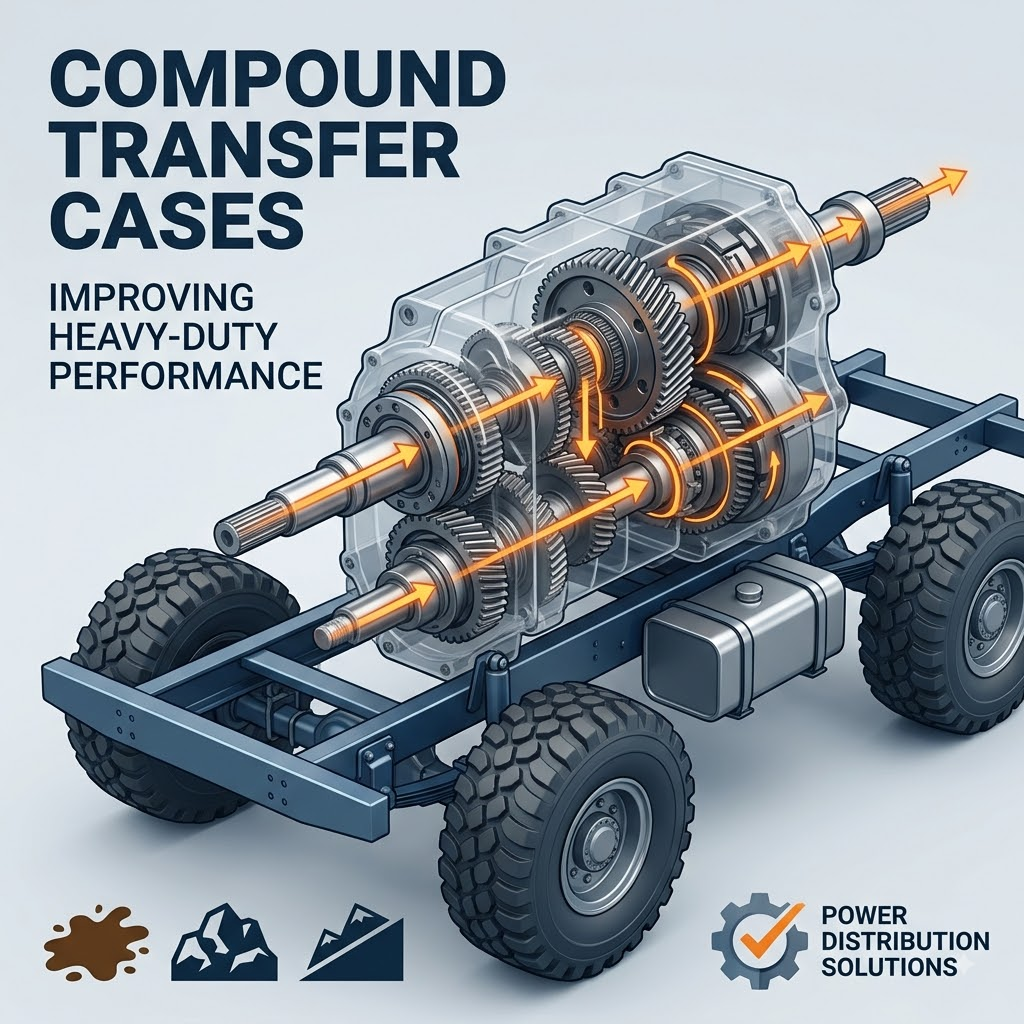
A Compound Transfer Case is a specialized drivetrain component designed to distribute and manage power between different output shafts or drive systems.
In traditional vehicle systems, a standard transfer case mainly transfers power from the transmission to front and rear axles. However, compound transfer cases are designed for more complex applications where additional power distribution, multiple drive outputs, or higher torque management are required.
These systems are commonly used in applications where vehicles or equipment need:
· Higher torque capacity
· Multi-axle power distribution
· Improved traction performance
· Reliable operation under heavy loads
The design of a compound transfer case usually involves carefully engineered gears, shafts, housings, and internal components to ensure efficient power transmission.
For heavy-duty applications, every component inside the transfer system must work together with precision. A small issue in gear alignment or component strength can affect the entire drivetrain performance.
Why Industries Need Advanced Transfer Case Solutions
The demand for more capable power transmission systems is increasing as industries move toward heavier equipment, more challenging operating environments, and improved productivity requirements.
Several factors are driving the development of advanced transfer case technologies.
Increasing Demand for Heavy-Duty Equipment
Construction, mining, agriculture, and specialized transportation industries continue to require equipment capable of operating in extreme conditions.
These applications often involve:
· High loads
· Uneven terrain
· Long operating hours
· Frequent torque changes
Standard drivetrain systems may struggle under these conditions, creating demand for stronger and more adaptable solutions.
Growing Need for Better Power Efficiency
Modern machinery is expected to deliver higher performance while improving fuel efficiency and reducing operating costs.
A well-designed transfer case helps optimize power delivery by ensuring energy from the engine is distributed effectively.
More Complex Vehicle Configurations
Many modern commercial and special-purpose vehicles require customized drivetrain layouts.
Examples include:
· Multi-axle vehicles
· Off-road transport systems
· Engineering vehicles
· Specialized industrial machinery
These applications often require transfer systems designed around specific performance requirements.
Key Advantages of Compound Transfer Cases
Compound transfer cases provide several important benefits for demanding applications.
Enhanced Torque Management
Heavy-duty equipment requires drivetrain components capable of handling significant power loads.
Compound transfer cases are designed to support efficient torque distribution, helping machinery maintain performance under difficult operating conditions.
Improved Traction Capability
For vehicles operating on challenging terrain, maintaining traction is essential.
A properly designed transfer system helps distribute power more effectively between different drive outputs.
This improves:
· Vehicle stability
· Mobility
· Operational reliability
Flexible System Integration
Different industries have different drivetrain requirements.
Compound transfer cases can be customized according to:
· Vehicle configuration
· Output requirements
· Operating environment
· Load conditions
This flexibility makes them suitable for specialized applications where standard solutions may not be practical.
Manufacturing Considerations for Reliable Transfer Cases
Producing reliable Compound Transfer Cases requires careful attention to design, material selection, and manufacturing precision.
Precision Gear Manufacturing
Gears are among the most important internal components of a transfer case.
Manufacturing accuracy affects:
· Power transmission efficiency
· Noise control
· Component lifespan
· Mechanical stability
Precision machining and proper inspection are essential to ensure reliable performance.
Strong Material Selection
Transfer cases operate under continuous mechanical stress.
Materials need to provide:
· High strength
· Wear resistance
· Durability
· Structural stability
The right material selection helps extend service life and reduce maintenance frequency.
Housing and Assembly Quality
The outer housing protects internal components and maintains proper alignment.
Manufacturing quality influences:
· Internal component positioning
· Heat management
· Protection against external conditions
A complete manufacturing process ensures the final product performs consistently in real applications.
Manufacturing Factor | Performance Impact | Customer Benefit |
Precision machining | Improves component accuracy | More stable operation |
Material selection | Enhances durability | Longer service life |
Assembly control | Maintains system alignment | Reduced maintenance risk |
Quality inspection | Ensures consistency | Reliable production performance |
Applications Across Different Industries
Compound Transfer Cases are used in industries where reliable power distribution is essential.
Off-Road Vehicles
Off-road vehicles often face unpredictable terrain and demanding driving conditions.
Transfer systems help improve:
· Traction performance
· Power distribution
· Vehicle control
Construction Machinery
Construction equipment operates under heavy loads and continuous stress.
Reliable transfer solutions support:
· Efficient power delivery
· Stable operation
· Improved equipment productivity
Agricultural Machinery
Modern agricultural equipment requires strong drivetrain systems to operate across different field conditions.
Compound transfer cases help manage power requirements for specialized machinery.
Special-Purpose Vehicles
Emergency vehicles, military-related equipment, and industrial transport systems often require customized drivetrain solutions.
These applications benefit from reliable power transmission systems designed for specific operational needs.
Compound Transfer Cases vs Standard Transfer Cases Comparison
Feature | Standard Transfer Cases | Compound Transfer Cases |
Power Distribution | Basic front/rear power transfer | More complex power management |
Application | General vehicles | Heavy-duty and specialized systems |
Torque Handling | Suitable for standard loads | Designed for higher load demands |
System Flexibility | Limited configurations | Customizable drivetrain solutions |
Operating Conditions | Normal environments | Challenging industrial conditions |
The choice between standard and compound transfer cases depends on vehicle requirements, operating conditions, and performance expectations.
How to Select the Right Transfer Case Solution
Choosing a suitable transfer case requires more than checking basic specifications.
Manufacturers and equipment developers should consider several factors.
Operating Environment
Different environments create different demands.
For example:
· Construction sites require durability
· Off-road vehicles require traction performance
· Industrial equipment requires stable long-term operation
Load Requirements
The transfer case must match the expected torque and operating load.
Selecting a solution with insufficient capacity may lead to premature wear or reduced reliability.
Customization Capability
Many industrial applications require specially designed drivetrain systems.
A capable manufacturer should provide solutions based on:
· Technical drawings
· Vehicle structure
· Performance requirements
· Application conditions
Future Trends in Power Transmission Systems
The global machinery industry is moving toward more efficient, intelligent, and specialized drivetrain solutions.
Several trends are shaping the future of transfer case development.
Higher Efficiency Requirements
Manufacturers are focusing on reducing energy losses while improving mechanical performance.
Increased Customization
As equipment becomes more specialized, demand for customized drivetrain components continues to grow.
Integration with New Power Systems
The development of hybrid and alternative power systems is creating new opportunities for advanced transmission components.
Future transfer case solutions will need to balance strength, efficiency, and adaptability.
How Shenglite Machinery Supports Advanced Transmission Solutions
Shenglite Machinery focuses on manufacturing mechanical transmission components and providing solutions for industrial applications that require reliable performance.
With experience in precision manufacturing and drivetrain-related products, the company supports customers seeking durable power transmission solutions, including Compound Transfer Cases designed for demanding operating environments.
For companies developing heavy-duty vehicles or specialized machinery, choosing a manufacturing partner with engineering capability and production experience can help improve product reliability and reduce development risks.
Frequently Asked Questions
1. What are Compound Transfer Cases used for?
Compound Transfer Cases are used to manage and distribute power in complex drivetrain systems, especially for heavy-duty vehicles and specialized machinery.
2. How are Compound Transfer Cases different from standard transfer cases?
Compound transfer cases are designed for more complex power distribution requirements and are typically used in applications requiring higher torque capacity and greater flexibility.
3. Which industries use Compound Transfer Cases?
They are commonly used in off-road vehicles, construction equipment, agricultural machinery, industrial vehicles, and other heavy-duty applications.
4. Can Compound Transfer Cases be customized?
Yes. Transfer cases can often be developed according to specific vehicle structures, load requirements, and operating conditions.
Conclusion
As heavy-duty industries continue to demand stronger performance, greater efficiency, and more flexible drivetrain systems, Compound Transfer Cases are becoming an important solution for advanced power transmission applications.
By improving power distribution, supporting higher loads, and adapting to specialized requirements, compound transfer cases help manufacturers develop more reliable vehicles and equipment.
For businesses looking for customized drivetrain components, working with an experienced manufacturer can provide valuable support in design optimization, production quality, and long-term equipment performance.